


How to Turn Energy Data into Better Business Decisions
Companies today collect more energy data than ever before. Smart meters, sensors, SCADA systems and energy management systems (EMS) enable accurate monitoring of electricity consumption almost in real time.
However, collecting data alone does not automatically lead to greater energy efficiency. The real value of energy data becomes clear when a company uses it to make better business decisions, optimise processes and reduce energy costs.
Data alone does not generate savings. Savings are created when companies turn data into timely and measurable actions.
Monitoring Energy Consumption Is Only the First Step
Many companies already monitor energy consumption, but the data is often used mainly for monthly reports or to review electricity bills.
This approach shows how much energy a company consumes, but it does not answer the more important questions:
The answers to these questions enable effective energy management.
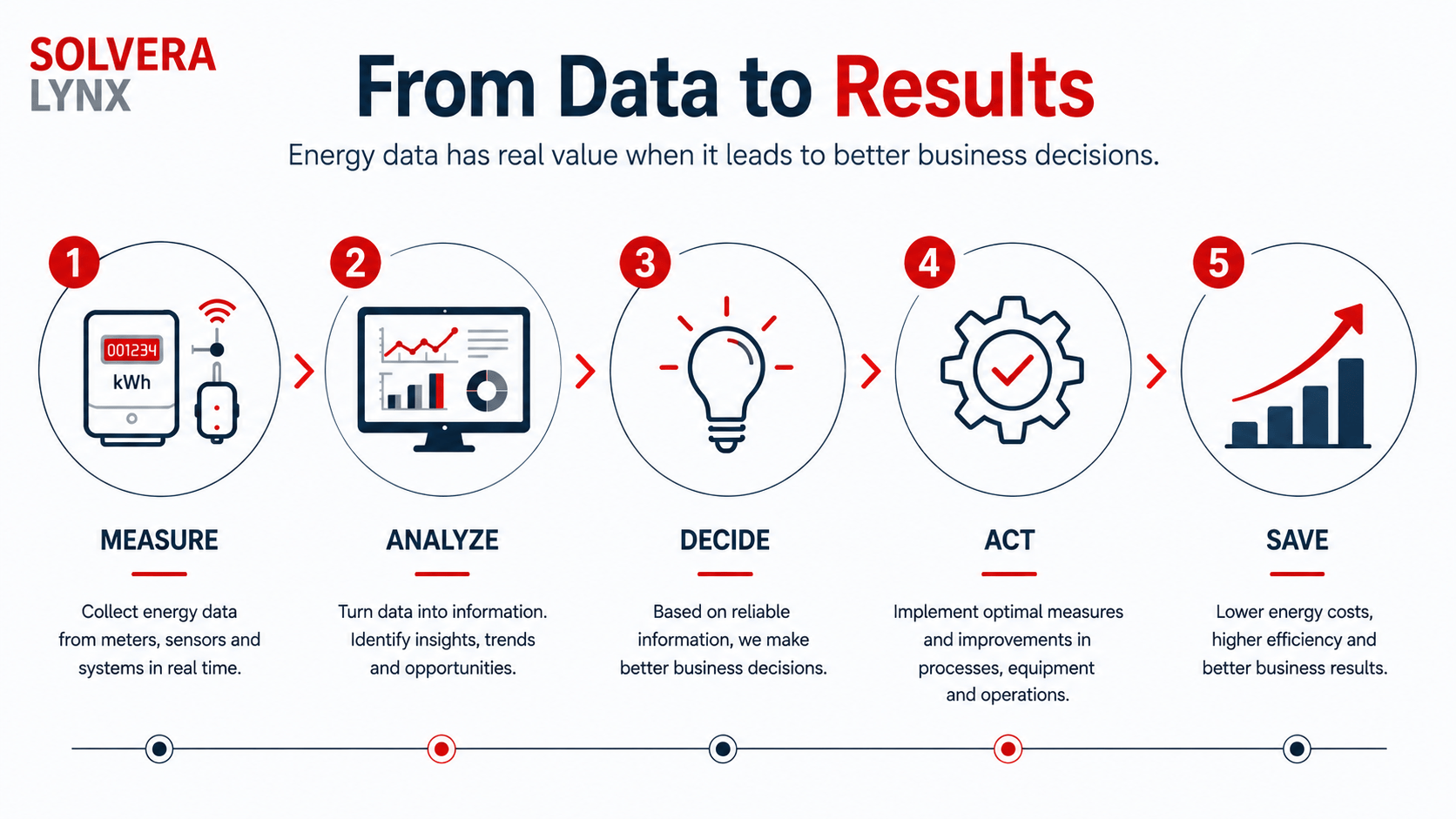
From data to results: measurement, analysis, decision, action and savings.
Energy Data Becomes Useful Through Analysis
Energy data comes from different sources – electricity meters, production lines, HVAC systems, solar power plants, battery storage systems and other devices.
If this data remains scattered across different systems, it is difficult to use it for decision-making. An energy management system (EMS) enables all data to be collected in one place, where it can be analysed, compared and linked to business processes.
In this way, a company can identify deviations, inefficiencies and opportunities for improvement more quickly.
Monitor the Indicators That Affect Business Performance
In energy management, what matters is not how much data we have, but which data we monitor and how we connect it with production, costs and business objectives.
Energy consumption per unit of product
Consumption by production line or facility
Peak demand
Energy costs by process
CO₂ emissions
Energy consumption trends over time
These indicators enable better production planning, more efficient use of energy and faster detection of deviations.
From Passive Monitoring to Active Energy Management
The traditional approach means taking action only when a company receives an unexpectedly high electricity bill. Modern energy management systems enable proactive management.
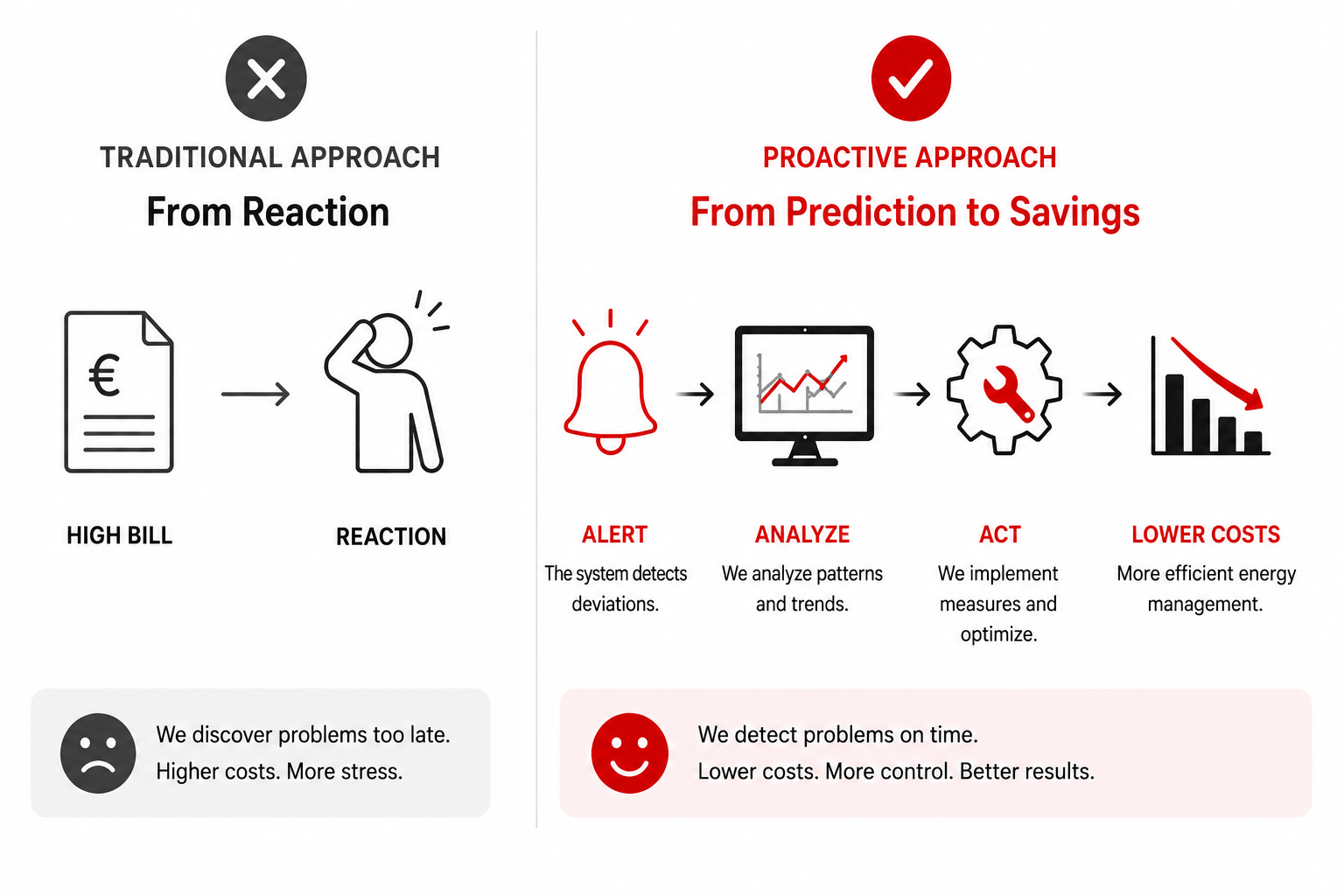
A proactive approach enables a company to act before additional costs arise.
Automated alerts can detect unusual increases in consumption, peak demand exceedances, equipment malfunctions and energy losses in time.
Energy Data as Support for Business Decisions
When energy data is reliable and available almost in real time, it becomes an important basis for business decisions.
Based on this data, a company can optimise the scheduling of energy-intensive processes, plan investments in more energy-efficient equipment, assess the feasibility of a solar power plant or battery storage system, improve HVAC performance and reduce energy consumption and operating costs.
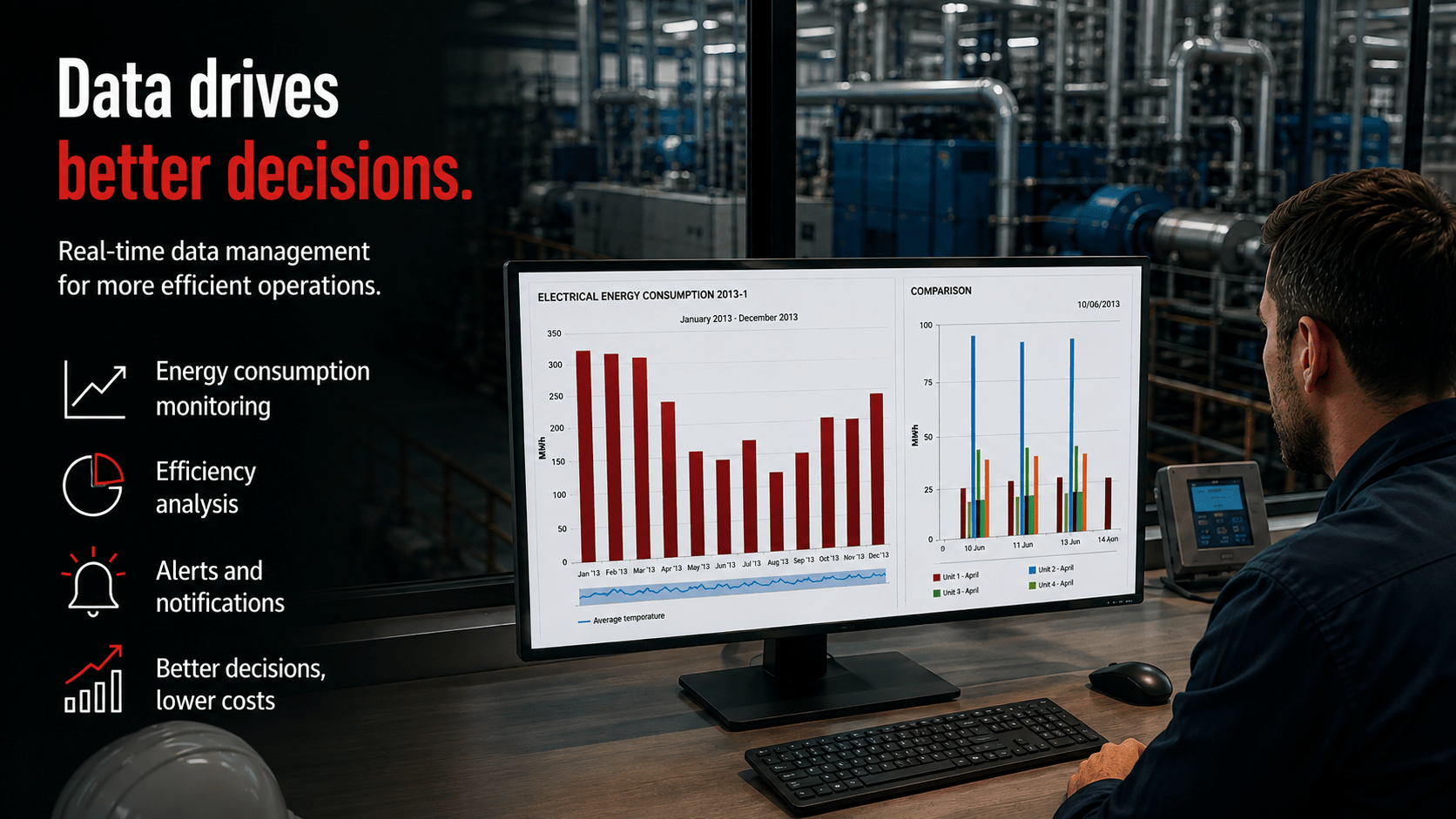
Energy data as support for better business decisions.
Identifying losses and taking timely action.
Decision-making based on reliable data.
Better utilisation of equipment and processes.
Energy management as part of business strategy.
Energy Data and New Regulatory Requirements
The importance of high-quality energy data is also increasing due to European requirements in the areas of energy efficiency, ESG reporting and the ISO 50001 standard.
Companies need reliable data to demonstrate regulatory compliance, prepare reports and manage energy effectively and systematically.
Technology Alone Is Not Enough
Even the most advanced system will not deliver results if the data is not included in everyday decision-making.
The most successful companies use energy indicators in production planning, investments, maintenance and business performance monitoring. In this way, energy management becomes an important part of long-term business strategy.
Conclusion
Energy data is no longer merely technical information. It enables companies to manage energy more effectively, reduce operating costs, increase energy efficiency and meet regulatory requirements more easily.
Companies that know how to turn their energy data into concrete business decisions will be more competitive, more efficient and better prepared for future challenges in the energy market.
Are You Ready to Unlock the Value of Your Energy Data?
The Solvera Lynx team can support you with energy consumption monitoring, EMS implementation, energy audits, ISO 50001 and the digitalisation of energy management.